
Frequently Asked Questions
-
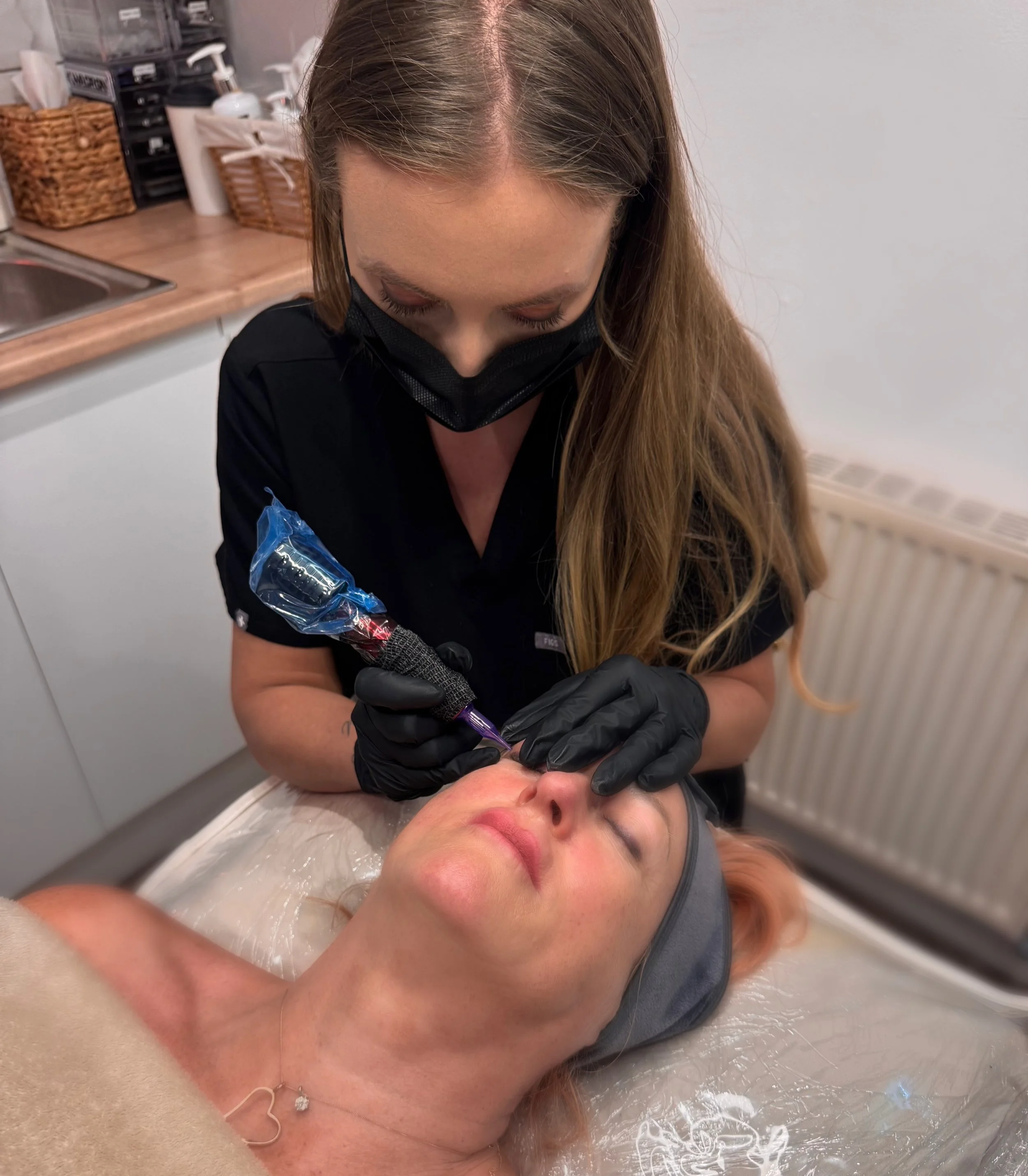
Permanent Makeup (PMU), also known as cosmetic tattooing, is a treatment that uses advanced techniques and pigments to enhance facial features such as brows, lips, and eyeliner. Pigment is implanted into the skin to create a soft, makeup-like effect that enhances your natural features and reduces the need for daily makeup.
-
Permanent Makeup can be used to enhance:
Brows (including powder, ombré and hybrid techniques)
Lips (lip blush or lipstick)
Eyeliner (shaded, classic or lash enhancement)
We will recommend the most suitable treatment during your consultation.
-
No. PMU is different from body tattooing. The pigment is implanted much more superficially in the skin and is designed to fade gradually over time rather than remain permanent. This allows your treatment to evolve naturally with your face and style.
-
Results typically last 1–3 years, depending on factors such as:
Skin type
Lifestyle and sun exposure
Pigment choice
Aftercare
Individual skin response
Maintenance or colour-boost appointments are recommended to keep results fresh.
-
Yes. Immediately after treatment, the colour will appear darker and more intense. This will soften by up to 30–50% as healing progresses, revealing a more natural, makeup-style result.
-
Discomfort levels vary from person to person. Most clients describe the sensation as mild to moderate and very manageable. Topical numbing products are used to minimise discomfort throughout the procedure.
-
Yes. PMU is designed to fade gradually. Colour will soften and lighten as the skin heals and continues to fade naturally over time. This is normal and expected.
-
Appointments typically last 2–3 hours, depending on the treatment area and technique. This includes consultation, mapping, numbing, treatment time, and aftercare advice.
-
A consultation and patch test are recommended prior to treatment. This allows us to assess suitability, discuss expectations, choose the correct pigment and technique, and ensure your safety.
-
Yes. A top-up appointment is essential and is usually carried out 6–8 weeks after your initial treatment. This allows us to perfect the shape, colour, and longevity once the skin has fully healed.
-
Permanent Makeup is usually completed over two appointments:
Initial treatment – where the shape, colour and technique are created
Top-up appointment – carried out 6–8 weeks later to perfect the result once the skin has healed
Some clients require a third session to finalise their results. This is usually if a heavy make-up look is requested, the client has underlying health concerns or if they have a particular skin type that makes pigment retention difficult.
After completion, maintenance or colour-boost appointments are typically required every 12–36 months, depending on skin type, lifestyle and personal preference.
-
Yes, when performed by a trained professional using sterile equipment and high-quality pigments. We follow strict hygiene protocols, provide thorough aftercare guidance, and ensure all treatments are tailored to you.
-
Yes. PMU can often be lightened, modified, or removed using laser tattoo removal if required. This may be suitable for old work, colour correction, or a change of style and will be discussed during consultation if relevant.
-
Permanent Makeup may not be suitable if you are:
Pregnant or breastfeeding
Taking certain medications
Experiencing active skin conditions or infections in the treatment area
Undergoing certain medical treatments
-
Healing typically takes 7–14 days on the surface, with full skin healing continuing beneath the surface for several weeks. Mild redness, swelling, tenderness, flaking or scabbing are normal during healing.
-
Full aftercare instructions will be provided. Generally, you must avoid:
Water, makeup and skincare products on the area for the advised period
Sun exposure, sunbeds and fake tan
Swimming pools, saunas and steam rooms
Touching, picking or scratching the treated area
Following aftercare is essential for best results and pigment retention.
-
Common side effects include redness, swelling, tenderness and flaking. These are temporary and part of the normal healing process.
-
As with any cosmetic procedure, there are risks, although they are rare when carried out correctly. These may include infection, pigment retention issues or colour changes, most often linked to poor aftercare or individual skin response.
-
Yes. Our goal is always to enhance your natural features, not overpower them. Shape, colour and technique are carefully chosen to suit your face, skin tone and personal preferences.