
Frequently Asked Questions
-
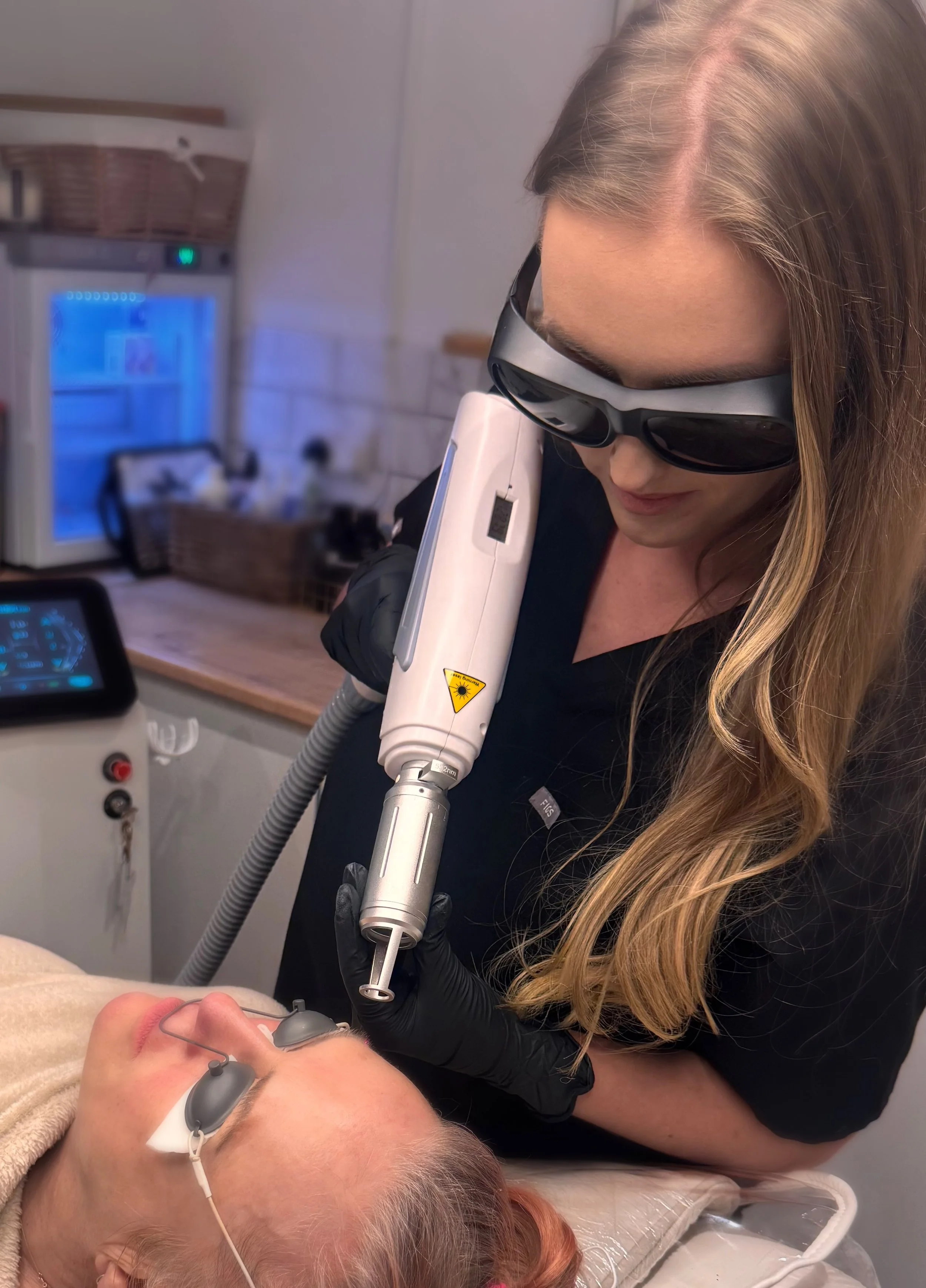
Laser tattoo removal is a non-invasive treatment that uses advanced laser technology to break down tattoo ink particles within the skin. These particles are then gradually eliminated by the body’s immune system over a series of treatments.
-
On average, tattoo removal requires 3–15 sessions. This varies significantly between individuals and depends on several factors, including:
Age of the tattoo
Ink colour and density
Placement on the body
Depth of ink
Original artist’s technique
Generally, older tattoos are easier to remove than newer, darker ones.
-
A £25 consultation fee is charged, which is redeemable against your first treatment as a deposit.
The cost per session varies depending on the size of the tattoo. Your tattoo will be measured during your consultation, and a full treatment quote will be provided before any sessions begin.
-
Not necessarily. The age and darkness of the ink are the main factors that determine how easily a tattoo can be removed. While smaller tattoos can be easier for the body to process, newer or heavily saturated tattoos will still require multiple sessions.
-
Yes. Multiple tattoos can be treated in one session provided they fall within safe treatment limits. There is a maximum amount of ink the body can effectively process at one time; treating too much can overwhelm the immune system and reduce results.
-
Large or dense tattooed areas are usually split into multiple sessions. For example, half of the forearm may be treated in one appointment and the remaining half at the next. This ensures safe, effective results and allows proper healing.
-
Short answer: yes, it can be uncomfortable, but most clients find it very manageable.
Treatment is much quicker than getting the tattoo itself, and discomfort stops immediately once the laser stops.
-
Most clients describe the sensation as a hot snapping or elastic-band flick. The pulses are sharp but very fast, and many people feel more heat than pain. Sensation varies depending on tattoo colour, placement, skin sensitivity, and laser settings.
-
The area is iced before treatment to reduce discomfort and help prevent blistering. This makes a significant difference and helps minimise post-treatment heat, which can feel similar to mild sunburn for a few hours.
-
Sessions typically last seconds to a few minutes, depending on the size of the tattoo.
-
Yes. Permanent Makeup (PMU) is often easier to remove than body tattoos. The laser targets the pigment, gradually lightening it until the desired outcome is achieved. Some clients choose full removal, while others opt to lighten existing work before having it modified.
-
Yes, when performed by a trained professional. A consultation and patch test are mandatory
to ensure suitability and safety. Protective goggles are worn throughout treatment, and the skin is iced to minimise adverse reactions. Detailed aftercare guidance is provided to support healing and results.
-
Treatments are spaced 8–12 weeks apart to allow the skin to heal fully and give the body time to naturally remove the ink.
-
Many tattoos can be significantly faded or fully removed; however, results vary. Some tattoos may leave a faint shadow depending on ink type, depth, and individual skin response.
Black ink is the easiest to remove
Some colours are more difficult
Green, blue, and yellow inks are often resistant and may not respond to our laser
This will be discussed honestly during your consultation.
-
Full aftercare instructions will be provided. You must avoid:
Sun exposure, sunbeds, and fake tan on the area for at least 4 weeks before and after treatment
Heat treatments (saunas, hot baths)
Swimming pools and hot tubs
Tight clothing over the area
Certain skincare products and medications (as advised)
-
Most people are suitable; however, treatment cannot be carried out if you are:
Pregnant
Taking certain medications
Experiencing active skin infections or conditions in the treatment area
A full consultation is required to confirm suitability.
-
The most common side effects include redness, swelling, heat, and mild bruising. Occasional blistering or scabbing may occur.
-
Risks are rare when treatment is carried out correctly. Possible risks include scarring, pigment changes, or infection, most commonly when aftercare advice is not followed. The laser targets ink particles rather than healthy skin, helping to preserve skin integrity.